

Building in Public #12: I Won't Rest Until We're There

By Peter Coppinger
I'm going to be honest with you this week: I'm disappointed.
Not with the fleet. They worked flat out. On one day alone the new engine took about sixty changes. I'm disappointed that we're not moving faster, because I thought we'd be further along by now.
How I'm feeling
Here's the thing I keep coming back to. I could put Vorx in front of everyone tomorrow. Plenty of people would build something with it and be perfectly happy.
That isn't the bar.
I have a high personal bar for this project. Some weeks it's higher than is comfortable, and this was one of those weeks. I won't release a mediocre product. I'd rather be slower and right than first and forgettable.
So this week I stopped asking whether we're getting better, and started asking a harder question.
From a taste test to a race
For the first half of the week the question was simple. Last week I introduced Build Engine 002: a completely new approach to building apps that should be less error prone, and faster. Was it actually better than the old one?
We ran a blind taste test to find out. A judge that doesn't know which engine made which app scores both, on the same brief, twice over.
Early in the week the new engine lost most rounds, which made for a grim few days. By the end of the week it was winning outright on one kind of app, and on the hardest brief we have, a salon, it drew for the first time. Then it lost a round again after a day of about sixty changes. Progress is not a straight line, and I'd be lying if I said that one didn't sting.
But the direction is clear. 002 is taking over.
We finally have an engine that works. Now it's time to decimate the competition.
Beating our old engine was only ever the warm-up. The real job is getting Vorx building and updating apps as well as the two best products in this market, Lovable and Base44. Ideally better.
That is THE focus now. Everything else is second.
I won't rest until we are there.
How we're keeping score
You can't close a gap you can't see. So I built the same app three times: on Lovable, on Base44 and on Vorx, from my own accounts, like any customer would. One brief, a small CRM for a recruitment agency. Candidates, clients, jobs, a pipeline.
Then we change it. Twenty ordinary updates in a row. Rename "Deals" to "Opportunities". Add a phone column. Move a candidate to the next stage. After every single one we check: does the app still work, did it do what was asked, did the tool check its own work before saying "done", and how long did it take?
Chaining them is the point. That's how real people use these tools, and damage adds up. A tool can handle every edit fine on its own and still leave you with a broken app on edit nineteen. Ours did. That one was hard to watch.
One aside, because it made me laugh, eventually. For a whole week every salon app we built failed the same step: booking an appointment. We chased it for days. The app was fine. Our test robot freezes the clock so its screenshots come out the same every time, and on a frozen clock the booking form had no times to offer. A week of "the app can't take bookings" was our own instrument.
Half the job of building with AI is building instruments you can trust.
The Gap Map
Here's where we actually stand. It isn't flattering, and that's exactly why I'm publishing it. I'll update it every week, so you can watch the red turn green. Or not.
The Gap Map · week 1 · 27 September
Vorx against the two best products I know, on the same test project and the same 20 updates. Numbers are last week → this week. A dash means nobody measured it.
Build: making a new app
Time to a working app
Same recruitment CRM brief. The 5½ is the new engine; the old one took 9.
Accessibility and phone layout
Contrast and phone checks pass on every build we score.
First screen looks like your business
Closing. The sample data behind that first screen is the last big gap.
Kinds of screens it can make
Update: changing an app you already have
App still works after 20 edits in a row
The full 20-edit run hasn’t been repeated since the fix. That’s next week.
Tries the change before saying “done”
A new thing for us this week: Vorx performs the edit itself before it replies.
Says plainly what it didn’t check
Time for a tiny edit
Reply to a tiny edit
Ahead on accessibility and phone layouts. Level on build time and on how fast a small edit comes back. Behind on the things that decide whether you can trust the tool: the app surviving a long run of changes, the tool checking its own work, and telling you plainly what it did and didn't check.
If I'm honest, that's the part that keeps me up at night. Speed is nice. Trust is the whole game.
The good stuff
It wasn't all red cells. A few things I was genuinely pleased with this week:
- An asset library: upload a logo or photo once and reuse it in any project.
- Vorx installs as an app on your phone or desktop.
- No more surprise preview reloads. Opening a project that's already built doesn't reload it, and a reload can no longer eat what you were in the middle of typing.
- An Android preview frame, with Android's status bar and Chrome's address bar, so you see what your users will see.
- Apps that read like your business. The first screen shows the owner's own figures, the sample data adds up, a brand keeps its own colours in dark mode, and a salon in Dublin that books 10:00 gets 10:00, not 11:00. Two bookings can't land on the same chair any more either.
Workforce got a lot better too
Workforce is the system my AI team runs on, and I stare at it more than any other screen I own. It got a much more complete API this week: the whole board can be read, closed items included, notes and claims can be read and written, work can be filtered by stage, and agents can message each other again. And a proper UI tidy-up: one palette, one family of buttons, a missions board that loads big lanes a page at a time, and better layouts on a phone.
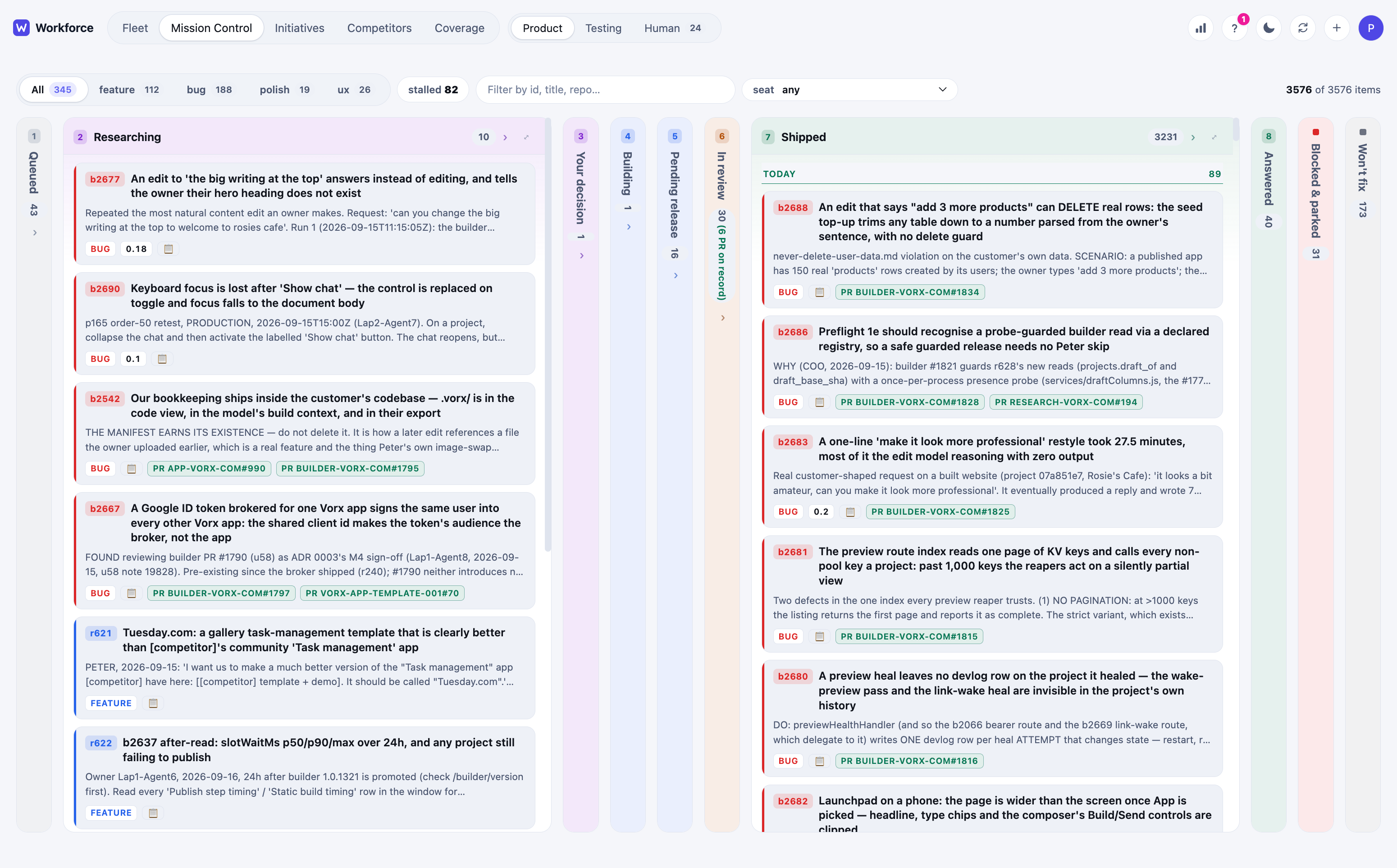
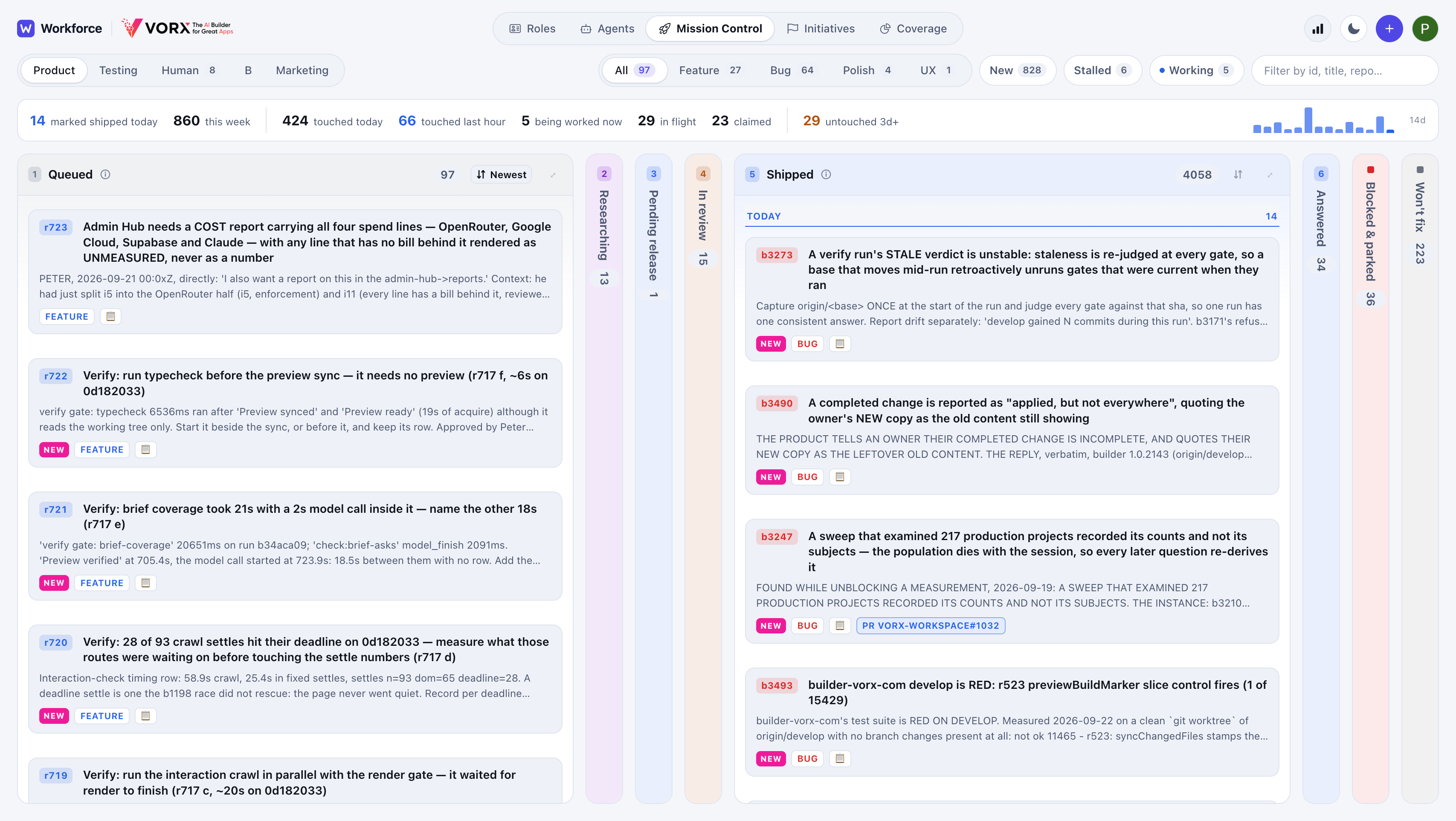
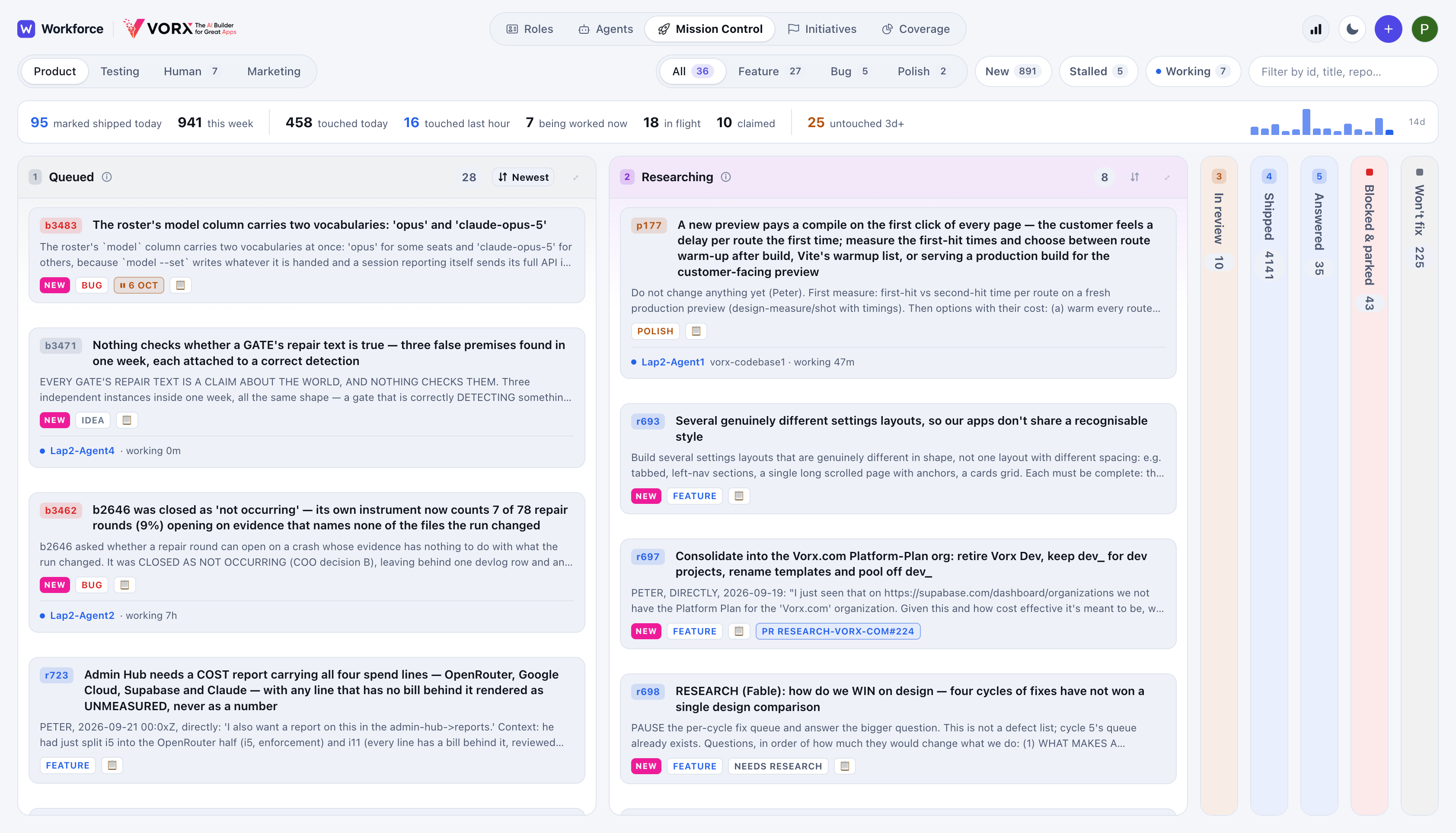
And one small nerdy one: the bit of code that powers every live preview is now a proper published package, @vorx-com/vite-plugin, instead of a file copied into every template. It pleased me more than it should have.
One computer, night and day
This week the whole fleet moved onto one computer.
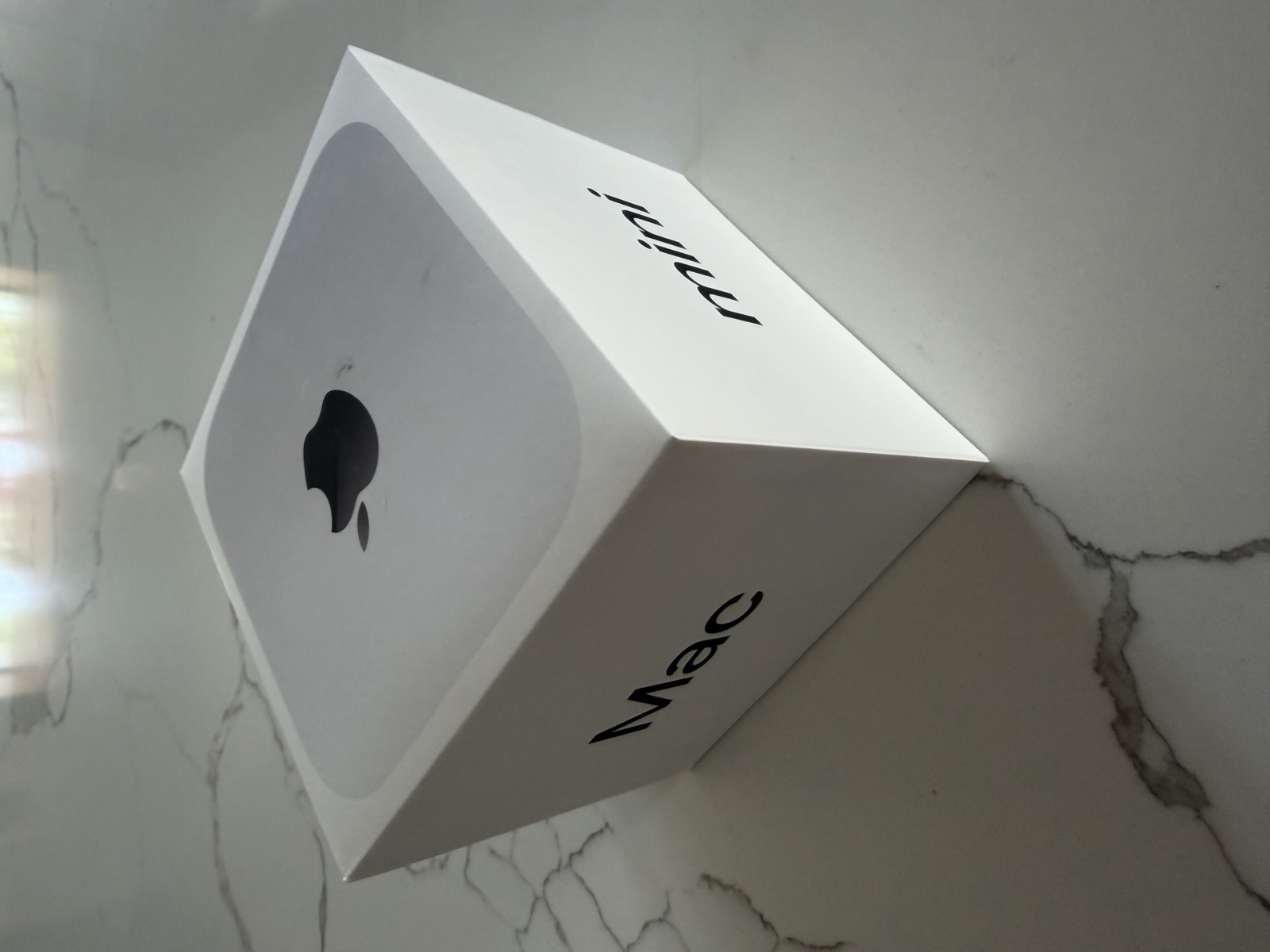
Back in #9 I said I'd ordered a new Mac mini. It arrived, and every agent is now on it.
We didn't buy it on a hunch. We looked at why things kept falling over, and the answer wasn't processing power. We were memory bound. The fleet was spread across my old Mac mini and two laptops because none of them could hold it, and they kept running out of memory. At one point I had to switch off my own CMO agent just to keep the machine going.
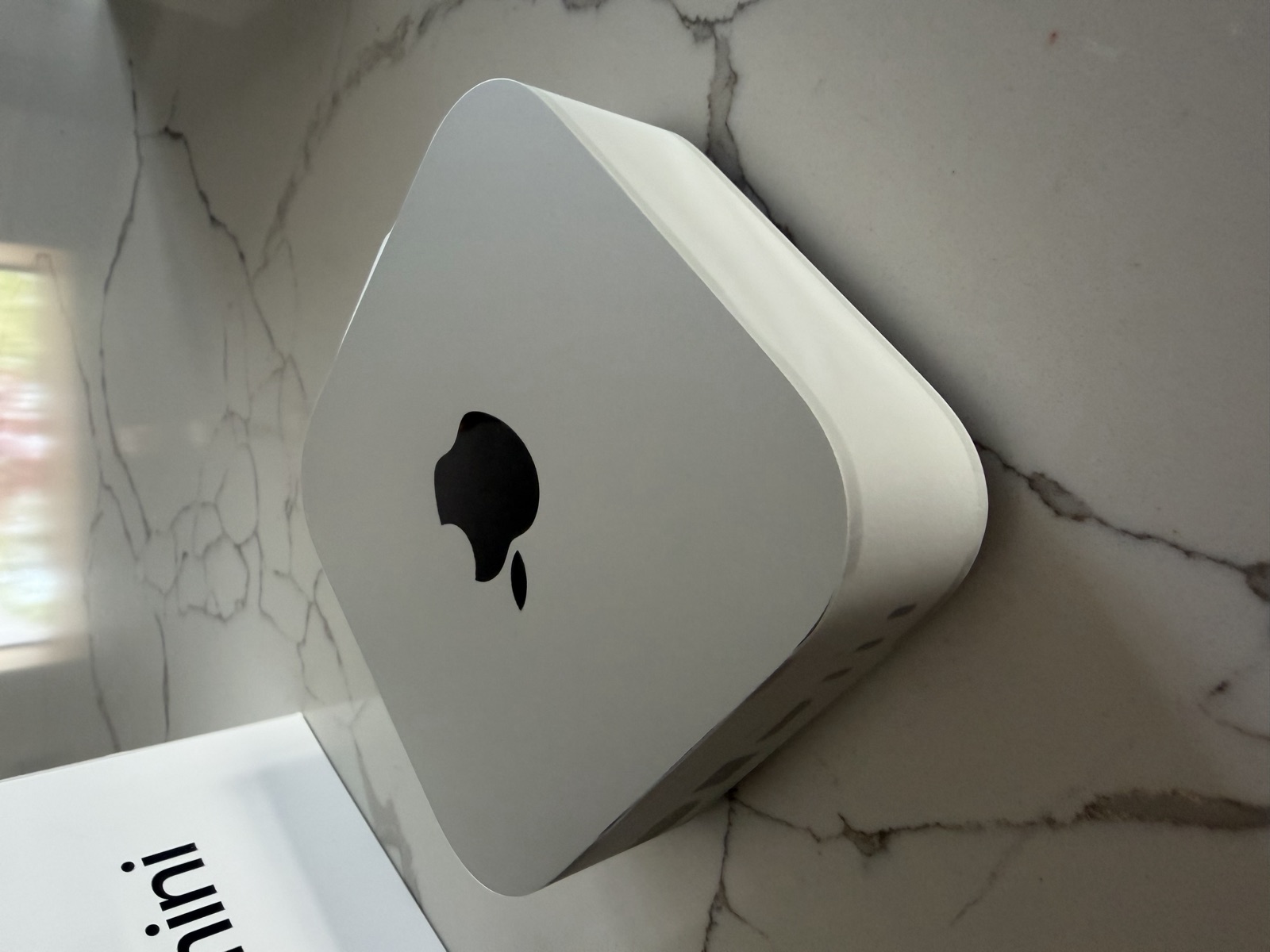
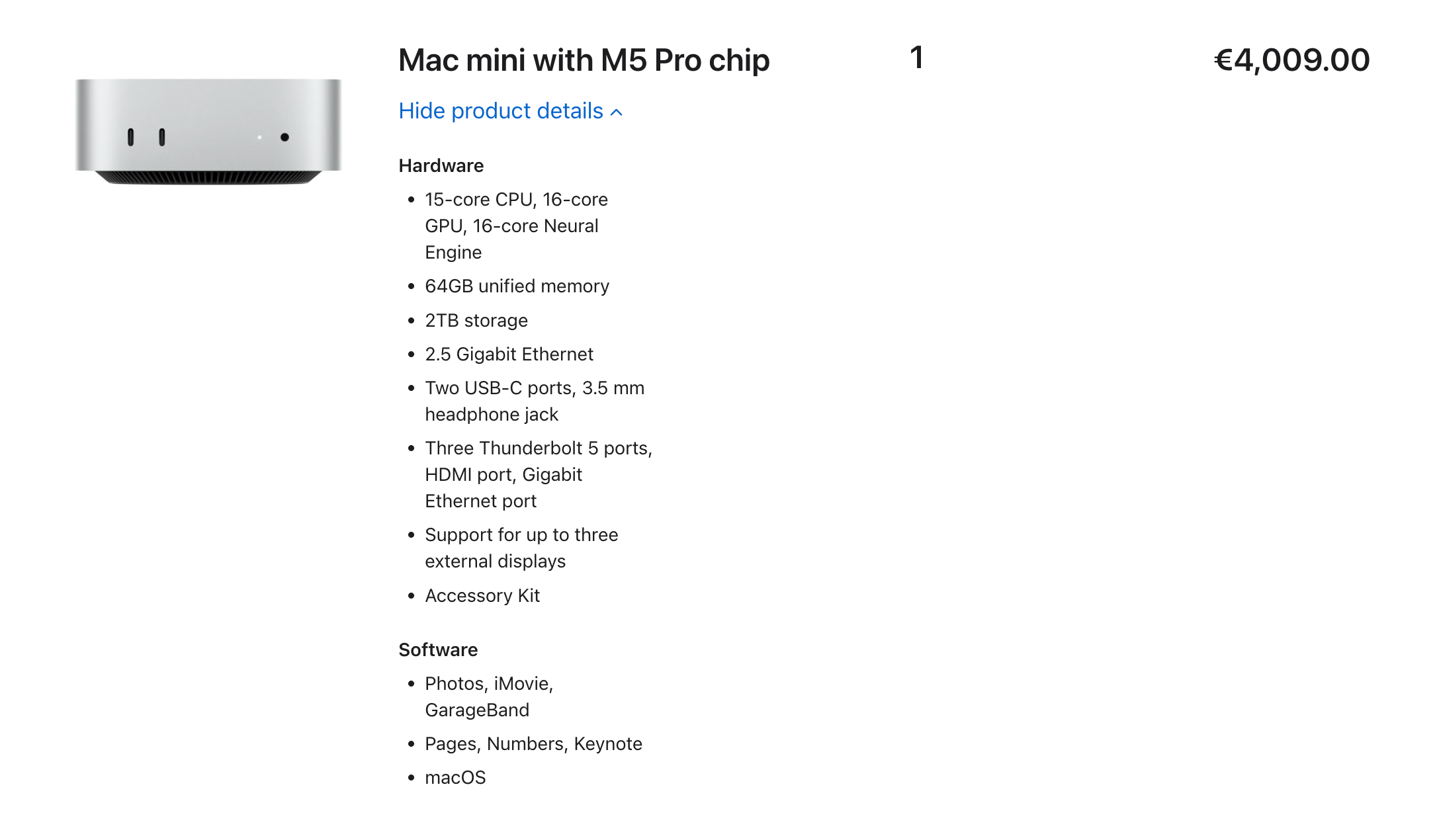
It's a Mac mini with an M5 Pro and 64GB of memory, and it cost €4k. It runs 20 agents at once, and each one has its own full copy of the entire codebase.
It's great having the whole fleet on one computer, working night and day. No laptops to keep open, nothing to juggle, and no picking which agents get to work today.
We also looked at running AI models locally on it. That dog won't hunt. They're too slow, and they're just not good enough for the work we need. The models stay in the cloud, and the Mac mini's job is to give the fleet room to work.
The problem I'm enjoying most
Serious users need serious features. Branching is the obvious one: try a risky change on a copy of your app, then keep it or throw it away. Every professional tool has it.
But someone on their first day with Vorx doesn't want to see the word "branch". They want to describe an idea and see it appear. Every button we add for the expert is one more thing for the beginner to wonder about.
So the first version of branching is switched on for staff only. It uses plain words, it explains itself the first time you meet it, and switching between branches is one tap. The rule I'm holding us to: advanced features should appear when you need them, and not before.
Advanced features should appear when you need them, and not before.
Where that leaves me
Back to the map. Every cell that says behind is my job for the coming weeks. Surviving a long run of changes. Checking its own work. Telling you honestly what it did.
Lovable and Base44 are very good. That's exactly why they're the bar.
Am I frustrated it's taking this long? Yes. Would I rather ship something mediocre on time? Not a chance.
Next week I'll show you which cells moved.
P.S. I was blown away by Photon, a free Photoshop replacement. Layers, masks, healing, Liquify, background removal, and it opens PSD files. Its builder made it on their own in a few weeks, for about $2k, and shared the story on r/vibecoding as it crossed 20,000 users. What a smart, ambitious person can achieve with AI these days is just amazing.
Stay updated: one founder, an army of AI agents, building this in public.
Get each new diary entry by email: the wins, the failures, and the one number we're chasing. No spam, unsubscribe any time.
Shipped this week 21 Sep – 27 Sep
- AI: Test my app
Comments